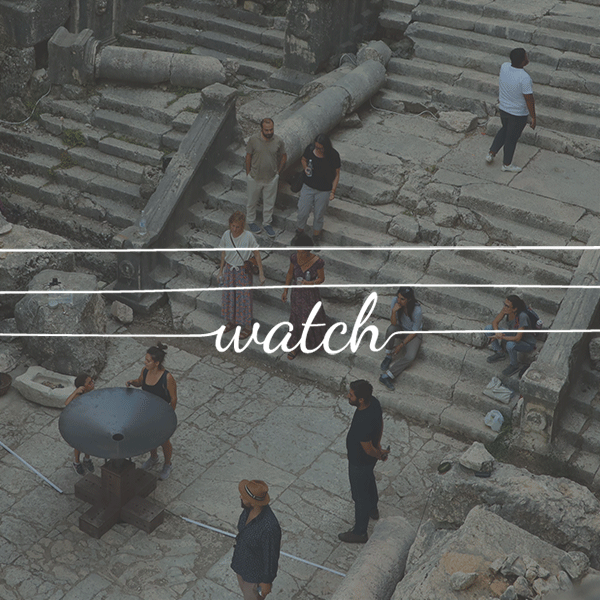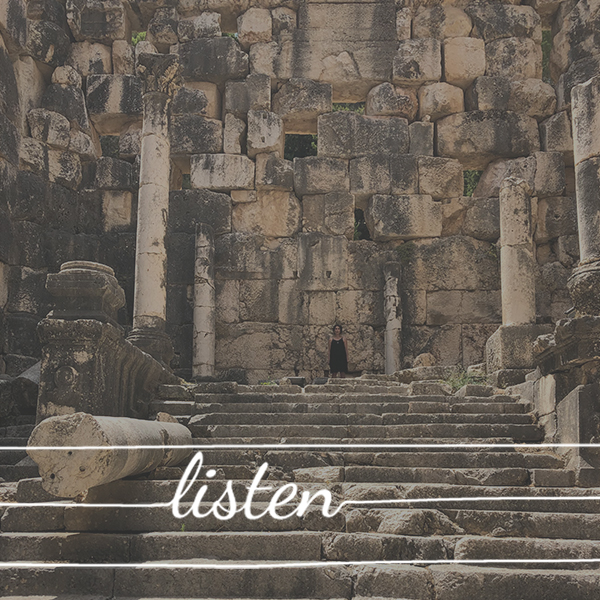
Lebanon, and more particularly the Bekaa, is a land of faith where, over the years, priests, orators, prophets, oracles, monks and preachers, have succeeded one another in worshipping and serving various pantheons and deities. The Roman sanctuary of Niha, perched on one of the hills of the eastern slope of the Sannine, is a marvellous place of religious and cultural meeting between East and West.
From the sacred water that gushes out from nearby and comes down to water the fertile lands of the Nihataeans came a local triad composed of Hadaranes, god of storm and rain (associated with Zeus and the Heliopolitan Jupiter), Atargatis, goddess of waters, destiny and fecundity (the famous Dea Syria who can correspond as well to the Phoenician Astarte and the Tyche of Beryte as to Venus and the Amazons), and of a young god who is not well known (often associated with Dionysus or the Heliopolitan Mercury).
The inscriptions brought to light during the excavations of the site inform us that between the 1st and the 3rd century AD, phase of the construction and the remodelling of the two temples, at least three characters whose names are now known devoted themselves to the cult of this Nihatan triad. Narkissos, son of Kasios, probably represents the high priest who sponsored the sanctuary. A high relief near the staircase of the great temple shows him standing holding a bunch of branches forming what seems to be a sprinkler in a ritual gesture typical of the time. The sculptor Tiberis, author of the work, is also linked to the temple since he designates himself as a priest-sculptor, which denotes the involvement of the inhabitants of the town in the functioning of the sanctuary, and finally Hochmaea, the virgin prophetess of the Dea Syriae Nihatenae and Hadaranis who, according to the dedication, lived for a hundred years and abstained from bread for twenty years on the order of the god in fulfilment of her vow.
The three names suggest, by their etymology, an absolute synergy between locals and settlers, and also inform us about the devotion and piety of the residents of ancient Nihata towards their deities, with whom, moreover, they seem to be in constant contact. We can thus imagine the spirituality of the place and the rituals, often quite exalted, that took place there at the time. Purification with sacred water, oracular consultations and sacrificial offerings were undoubtedly mixed with festive atmospheres in a rural setting that brought together hierogamy, fertility, the pastoral and agrarian calendar, fate and fortune…